
How We Brought Light Into a Dark Lake House Rental
· 5 min read · Lush Living Designs NC

A great setting can't carry a listing on its own if the rooms inside feel dark and dated. At our Lake Lure Retreat project, we brightened the house with a light palette and natural wood, pulled every room into one look, and planned the space around families who book together. Most of those moves work in any dim rental.
A lake house sells itself in the first photo of the water. Then the guest clicks through to the living room, and if it is dark and dated, the spell breaks. The setting gets them to look. The inside decides whether they book.
That was the starting point at Lake Lure Retreat. The property had a great setting and a dark, dated interior. Our job was to let in more light, pull the rooms into one look, and make the house work for the families who want to book it. Here is how we approached it, and what you can borrow if your own rental feels dim.
Why does a dark rental hold a listing back?
Guests feel a dark room before they can explain it. In photos, a dim space reads as small and a little tired, even when it is clean and well furnished. In person, it is the room where nobody can find the light switch at 10pm.
We own short-term rentals ourselves, and we have read the reviews where the lighting was the complaint. A bright, open room does the opposite. It makes the house feel cared for the moment the door opens.
So at Lake Lure, light was the first problem to solve, ahead of furniture and ahead of style.
Start with the palette, not the furniture
The fastest way to brighten a dark house is the color on the biggest surfaces. Before we picked a single sofa, we set a palette that would bounce light around and suit the lake: coastal blues, crisp whites and natural wood.
Each one has a job:
- Crisp whites on the large surfaces reflect daylight deeper into the rooms and make them photograph larger.
- Coastal blues connect the inside to the water outside, so the house feels like it belongs on the lake. Blue also reads as calm, which is the feeling most lake guests are booking.
- Natural wood keeps all that white and blue from feeling cold or clinical. It adds warmth and texture, which matters in a house people use in every season.
If your rental feels dark, look at the walls, floors and big upholstered pieces first. Heavy, dark finishes on those surfaces will soak up whatever light you add later.
Before and after: two bedrooms
The bones of each room did not change. The vaulted ceilings, the beams, the closets and even the vents are all where they were. What changed is how much light the surfaces give back, and how well each room fits the guest.
The bunk room
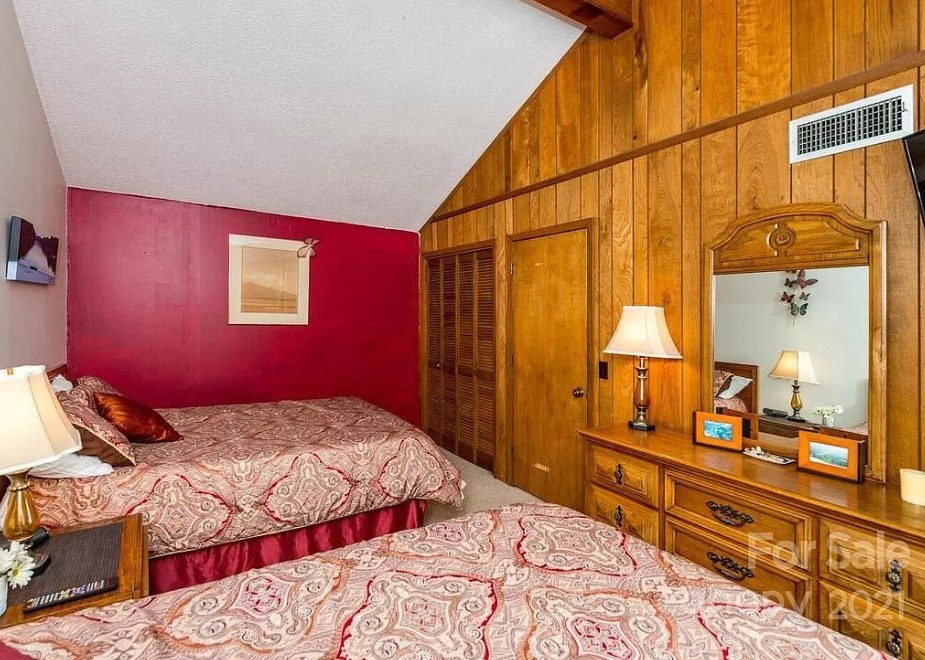
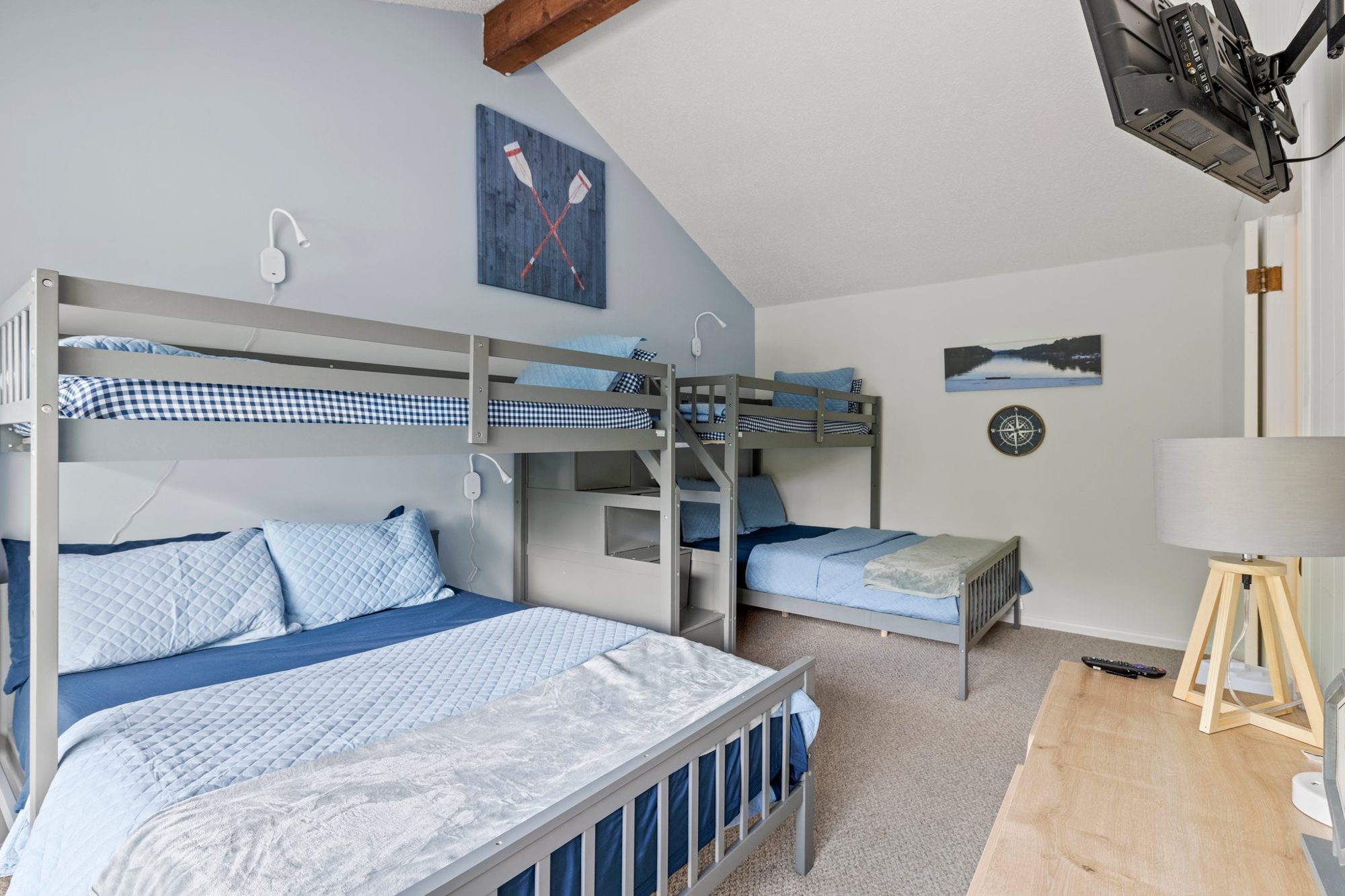
- The red accent wall became a soft blue, and the wood paneling went white.
- Two beds became two sets of bunks, so the room sleeps more people in the same footprint.
- Every bed gets its own wall-mounted reading light, so nobody needs a lamp or a nightstand.
- We kept the ceiling beam in its natural wood, so the room stays warm.
The bedroom
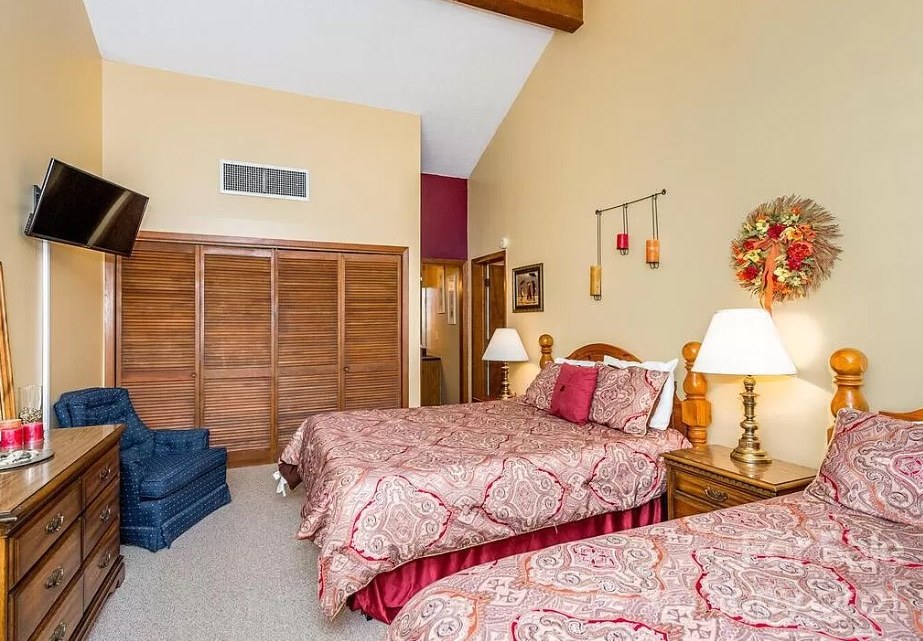
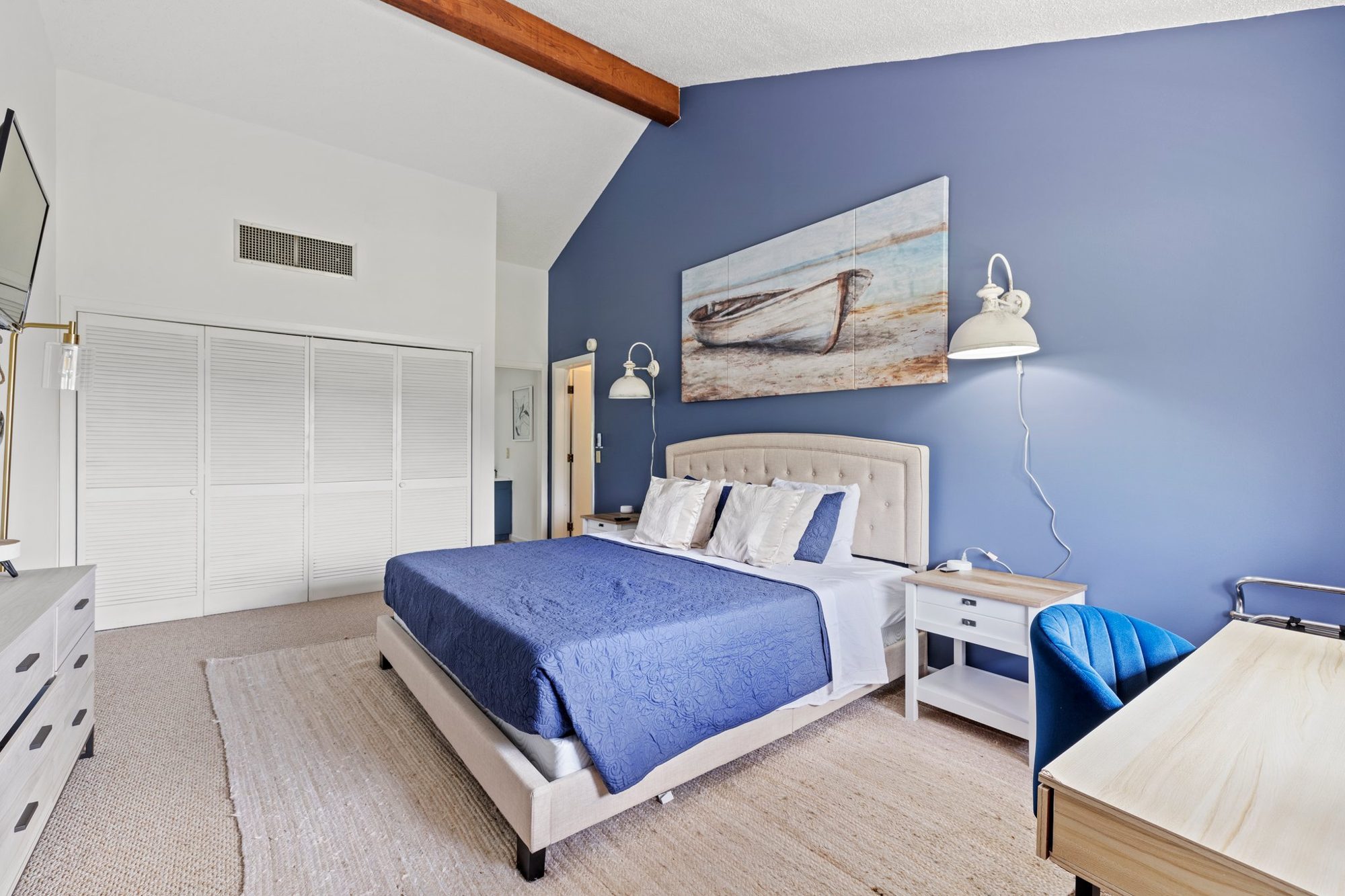
- Beige walls and wood closet doors went white, and the wall behind the bed became a deep blue.
- Two beds in busy patterned bedding became one bed with an upholstered headboard, so the room reads as a calm retreat for the adults.
- Table lamps gave way to swing-arm wall sconces, which free up the nightstands and light the bed for reading.
- A small desk, a chair and a luggage rack give a guest somewhere to work and somewhere to unpack.
Pull every room into one look
Dated houses often feel choppy, with a different color story in every room. At Lake Lure, the same palette and materials carry from space to space, so a guest scrolling the listing sees one house, not rooms from different decades.
A simple test for your own rental: line up your listing photos in order. If the colors jump around from shot to shot, a shared palette is one of the cheapest fixes you can make.
Plan the space around how families stay
A brighter house only earns its keep if it also fits the people booking it. For a lake house like this, that guest is the family or group who wants to spend the trip together. So we planned the main spaces around time spent as a group.
- An oversized sectional with layered rugs. The living room needed seating where a big group can actually sit together for a movie or a game night, not a sofa and two chairs that split the room. Layered rugs define the space and soften it underfoot.
- A bunk room that adds sleeping space. For many group bookings, the number of beds is what makes the house work at all.
- A game and lounge area. Kids and adults each get their own place to hang out. On a rainy lake day, that space is what keeps the trip fun instead of crowded.
What you can borrow for your own rental
You don't need a full redesign to use these ideas. Most dark rentals improve with the same order of moves:
- Lighten the big surfaces first. Walls and large pieces matter more than accessories.
- Add light in layers. One overhead fixture is rarely enough. Pair it with lamps for warm ambient light, task lighting where people read or cook, and a few accent lights so the room glows in the evening and in photos.
- Choose one palette and carry it through. A shared set of colors and materials makes the house feel finished.
- Furnish for your guest. Size the seating and sleeping space for the group most likely to book.
What we'd do first
If your rental feels dim, start with a walk-through at night. Turn on every light, stand in each doorway, and note where you would squint or reach for a switch you can't find. Then take a fresh photo of each room in daylight and compare. Those two lists tell you where the light is missing.
If you want a second set of eyes, our Lush Listing Audit is a 60-minute live video walkthrough of your rental, room by room, with feedback on layout, lighting, color and flow and a ranked punch list of what to fix first. You can also see how we approach full projects on our STR design page, or book a free consult and tell us about your property.
Projects in this post
- Lake Lure Retreat: A dark, dated lake house made bright and family friendly.
